
Cutting the Subscriptions
Systematically replacing paid services with self-hosted alternatives. From Spotify to Jellyfin, JetBrains to Neovim, Microsoft to Mailcow — owning the tools I depend on.
The Tipping Point
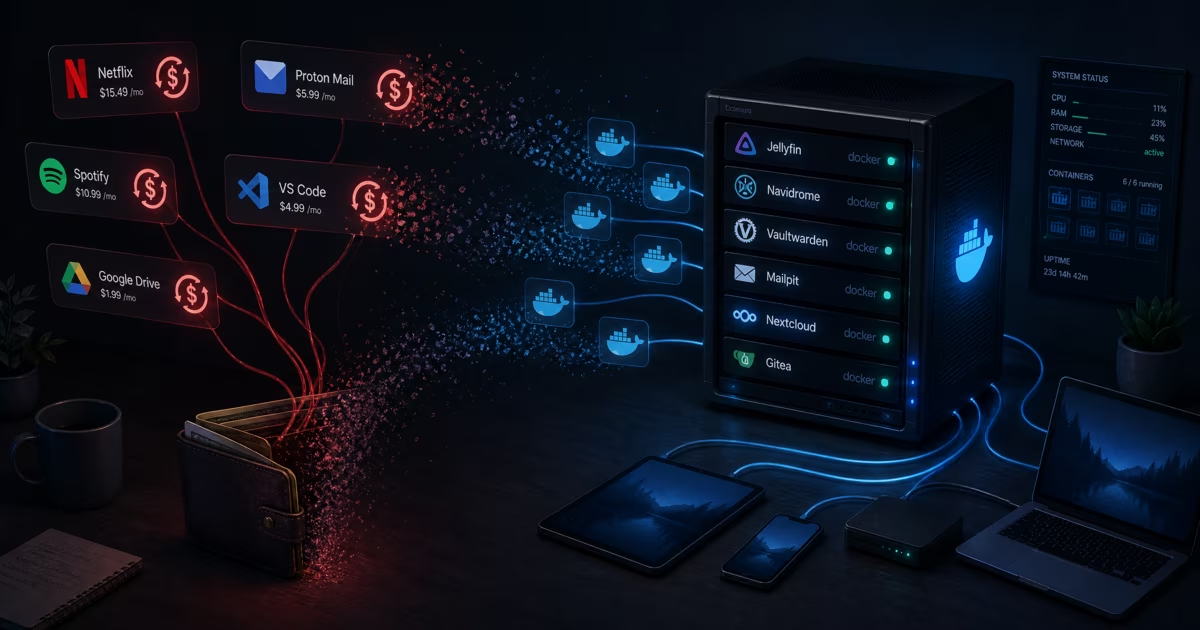
At some point I looked at my monthly subscriptions and realized I was paying for a dozen services that each owned a piece of my workflow. Spotify for music, Netflix and Crunchyroll for video, YouTube Premium, JetBrains for my IDE, GitHub Copilot for code completion, Microsoft for email, calendar, file storage, task management, and video calls. Each one reasonable on its own. Together, a significant monthly cost and every single one could change their pricing, features, or terms whenever they wanted.
I started replacing them one by one. Not all at once, not as a project. Just whenever a renewal came up or a service annoyed me enough, I’d look at the self-hosted alternative.
What Got Replaced
Entertainment
Jellyfin replaced Spotify, Netflix, and Crunchyroll. My music library streams to Symfonium on my phone. Series and videos play from the same server. No subscription, no content disappearing because a licensing deal changed, no ads. Runs on a Proxmox VM, accessible from anywhere through Tailscale.
The Microsoft Exit
This was the biggest one. I was deep in the Microsoft ecosystem — Outlook, Teams, OneDrive, Planner, To Do, Calendar. Extracting myself took time:
- Calendar → moved to my knaus.dev domain as primary calendar
- OneDrive → Nextcloud handles file sync, photo backup, and document storage
- Teams → Nextcloud Talk for communication
- Planner/To Do → migrated to calendar events, then Nextcloud, then Dadooo.ai
- Email → still on Microsoft. Last piece. Mailcow is ready, just need to migrate the remaining domains
Almost out. Email is the last dependency.
Development Tools
Neovim replaced JetBrains. This one took multiple attempts over the years. I’d try switching, hit a wall with Vim proficiency or missing features, and go back. What finally made it stick was finding Lazygit for Git operations and a proper database query tool. The remaining gaps closed, and the JetBrains subscription was gone.
The setup now is minimal and reproducible — NixOS declares it, Gitea stores the config, and a fresh machine is fully configured from a flake. No downloading installers, no signing into accounts, no restoring settings from a cloud backup.
GitHub Copilot went the same way. It was baked into JetBrains, limited in the same ways. I replaced it with Claude — first for chat-based development help, then Claude Code for the full workflow. That shift deserves its own post.
Everything Else
- Git hosting → Gitea for anything private, NDA work, or system configs
- Passwords & 2FA → Nextcloud manages credentials and OTP across devices
- DNS filtering → NextDNS for network-wide ad blocking (until I broke Minecraft with it)
- File sharing → LocalSend for quick transfers between devices
What I’m Not Replacing
Not everything needs to be self-hosted. GitHub stays for public open-source. The network effect matters there. Cloudflare stays for DNS and edge protection — I’m not running my own authoritative DNS servers. Hetzner stays because I’m not building a data center.
The point isn’t to self-host everything. It’s to own the things that matter to my daily workflow, so I’m not dependent on a company’s pricing decisions or feature roadmap.
The Cost
The total infrastructure cost — Hetzner machines, domains, electricity for the Proxmox homelab — is less than what the subscriptions were. And it doesn’t go up unless I decide to add something. No per-seat pricing, no tier changes, no “we’re sunsetting this feature.”
The actual cost is time. Setting up Mailcow, configuring OPNsense, maintaining Proxmox — none of that is zero-effort. But it’s time spent learning infrastructure at every layer, which directly makes me a better engineer for client work. The homelab isn’t a hobby cost. It’s professional development that happens to also serve my personal needs.
Written by
Peter KnausFounder of KnausDev. I build backend systems, AI pipelines, and enterprise platforms.